
Last Updated: October 2026 | Prices, refund terms, and ratings checked on Foreclosure Academy’s official site, the BBB, and Trustpilot
Is Foreclosure Academy legit? Mostly yes: it sells a real course on a real, legal business, recovering surplus funds that former homeowners are owed after a foreclosure sale, and its $497 to $997 Foreclosure Secrets course comes with a 30-day no-questions-asked refund. What deserves skepticism is the marketing. Headlines promise thousands a month, while the company’s own disclaimer says those results are not typical, and state laws cap what you can charge clients far below the 20 to 40 percent fees in its ads. This review covers what the program teaches, what it costs, the refund rules, the legal limits, and what customers report.
Content Outline
Key Takeaways
- Legit business, hyped results. Surplus funds recovery is legal in most states, but Foreclosure Academy’s own disclaimer says “the average person who buys ‘how to’ information gets little to no results.”
- Price: Foreclosure Secrets lists at $997 and is sold at a $497 advertisement price after the free workshop. A 50+ page ebook costs $1.99. Fast Track pricing is only given on a sales call.
- Refunds: 30 days, no questions asked, on the course and ebook. Fast Track’s guarantee requires 100 logged phone conversations with no closed deals.
- Fee caps: Florida limits recovery fees to 12 percent of the surplus and Colorado to 20 percent (30 percent after 3 years with the state treasurer), so check your state first.
- Reputation: BBB rating B with 22 complaints (not accredited) and a 3.2 out of 5 Trustpilot score from 71 reviews.
Is Foreclosure Academy Legit? The Short Answer
Foreclosure Academy is a real company that delivers what it sells: video training, templates, and community support for running a foreclosure overages business. It publishes a refund policy, a business address, a phone number, and an earnings disclaimer, which is more than many make-money courses do.
It is not a shortcut to easy money, though. The current landing page headline claims a method “adding $25,382 per month” to students’ income, and the same page says those figures are not typical. The work is sales and paperwork: finding former owners, convincing them to trust a stranger, and getting claims through a court or county. Treat the course as paid training for a commission-based service business and judge it on that basis.
What Foreclosure Academy Teaches: Surplus Funds Explained
When a property is sold at a foreclosure or tax sale for more than what is owed, the extra money is called surplus funds or overages. After the debt, fees, and any junior liens are paid, that surplus belongs to the former owner, and it usually sits with the court clerk, public trustee, or county until someone files a claim.
For example, if a home sells at auction for $200,000 and the lender is owed $100,000 plus $5,000 in fees and costs, about $95,000 is left over, minus any other liens, for the former owner. Many owners never claim it because they have moved, do not know the money exists, or do not understand the process.
Foreclosure Academy teaches you to find these cases, contact the former owners, and help them claim the money in return for a percentage. In 2023, the U.S. Supreme Court ruled unanimously in Tyler v. Hennepin County that a Minnesota county could not keep a $25,000 surplus left after selling a home for a $15,000 tax debt, and states such as New York have since changed their laws to let owners claim tax-sale surplus.
Foreclosure Academy Price and Refund Policy 2026
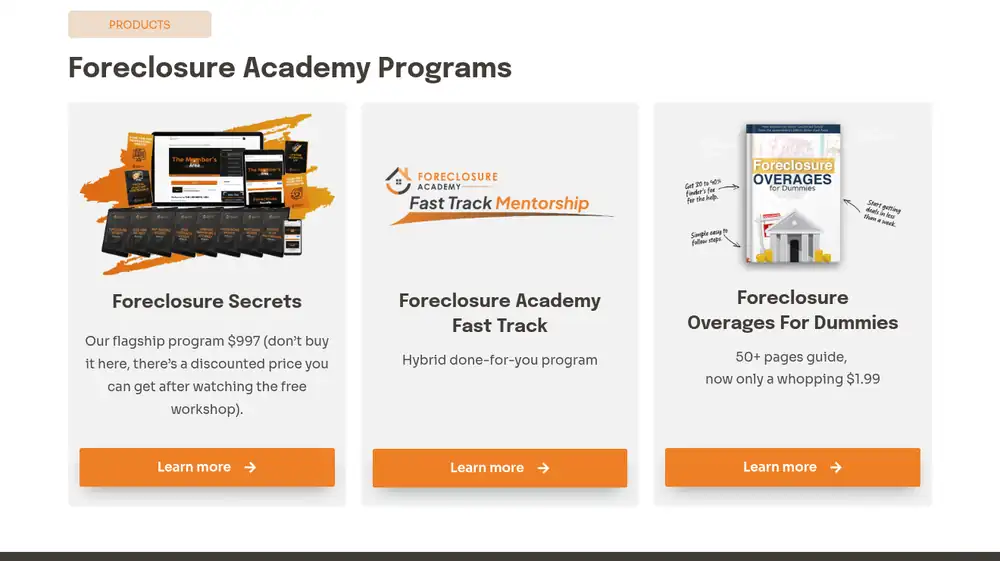
Foreclosure Academy sells three main products. Prices below come from its programs page and fulfillment policy, and refund terms from its return policy.
| Product | What you get | Price | Refund |
|---|---|---|---|
| Foreclosure Overages For Dummies | 50+ page PDF guide | $1.99 | 30 days, no questions asked |
| Foreclosure Secrets course | Training videos, templates, and support in a private Facebook group | $997 list; $497 advertisement price after the free workshop | 30 days, no questions asked |
| Fast Track program (3 or 6 months) | Training plus lifetime CRM access, leads, SMS and email outreach, a private Discord, 3 weekly calls with coaches, and an optional virtual assistant | Not published (sales call required) | Full refund if you log 100 phone conversations in the CRM and close no deals during the program |
| 100 Leads | Downloadable spreadsheet of leads | Not published | Non-refundable |
Two costs are easy to miss. Fast Track’s virtual assistant is hired separately: Foreclosure Academy says VAs usually cost around $1,000 a month and that it has negotiated roughly a 65 percent discount. And if you file a chargeback that the company wins, its terms allow a fee of $100 to $250, so request a refund by email at contact@foreclosure.academy first.
What Is Inside the Foreclosure Secrets Course
When we went through the course, Foreclosure Secrets started with a members’ area (a 56-page guide, an intro video, and the Facebook group invite) and then five core lessons, each with a video and a downloadable book:
- Foreclosure Secrets: how tax sale overages and mortgage overages work.
- Lead Generation Secrets: finding surplus cases in county and court records.
- Skip-Tracing Secrets: tracking down contact details for former owners.
- Lead Outreach Secrets: call scripts and letter templates for first contact.
- Overage, Paperwork, and Attorney: filing claims yourself or working with an overage attorney.
Students who do the work themselves also got lessons on outsourcing, auto-dialers, and building a business website with WordPress, plus an implementation track of recorded Q&A and role-play calls covering CRM use, skip tracing, and lead sources such as auction sites and court dockets. A final module was a series of weekly mindset calls. Fast Track students skip the do-it-yourself lessons because coaches and a VA handle much of that work.
Module names and lengths can change, so ask for the current outline before you pay. Much of the day-to-day work runs through a CRM; if you are setting up your own, our roundup of real estate CRMs compares the main options. Every client also has to sign a fee agreement, and our Docusign pricing guide shows what e-signatures cost.
The Legal Limits on What You Can Earn
Foreclosure Academy’s marketing talks about 20 to 40 percent finder’s fees and $10,000+ paydays. Whether you can legally charge that depends entirely on the state where the property sold:
- Florida: for court foreclosure sales, total compensation to anyone buying or taking an assignment of a surplus claim cannot exceed 12 percent of the surplus, and the contract must tell the owner they do not need an attorney or other representative (Fla. Stat. 45.033).
- Colorado: finder’s fee contracts are void while the public trustee holds the funds and during the first 2 years with the state treasurer; after that the fee is capped at 20 percent, or 30 percent once the money has been with the treasurer for 3 years or more (HB16-1090).
- Elsewhere: many states set their own caps, notice periods, or licensing rules, and some limit contracts signed before the sale. Read your state’s statute or ask a local attorney before you take on clients.
A fee that is legal in one state can make your contract unenforceable in another, so build your lead list around states where the numbers still work.
What Customers Say: BBB and Trustpilot
As of October 2026, Foreclosure Academy holds a B rating on its BBB profile, is not BBB accredited, and has 22 complaints filed against it. The company posts public replies to complaints on that page.
On Trustpilot it scores 3.2 out of 5 from 71 reviews, and Trustpilot notes the company has not invited reviews recently. The company’s own numbers also do not line up: its homepage says 10k+ students, while its About page says over 5,500.
Before paying for any online course, these tips to keep your money safe online are worth a quick read, and keep your receipt and purchase email in case you need the 30-day refund.
Foreclosure Academy Pros and Cons
Here is how the program weighs up after checking its current offer, terms, and reviews.
Pros
- Teaches a real, legal service that returns money owners are owed
- 30-day no-questions-asked refund on Foreclosure Secrets and the ebook
- $1.99 ebook lets you test the idea cheaply
- Publishes its business address, refund policy, and an earnings disclaimer
- Fast Track adds coaching, a CRM, and leads if you want done-for-you help
Cons
- Landing-page income claims are, by the company's own admission, not typical
- Fast Track price is only revealed on a sales call
- State fee caps (12% in Florida, 20% in Colorado) can be far below the fees it promotes
- BBB rating B with 22 complaints and a 3.2 Trustpilot score
- Chargebacks the company wins can cost you $100 to $250
Who Foreclosure Academy Is (and Is Not) For
It suits people who are comfortable cold-calling, handling paperwork, and waiting weeks or months for a court or county to release funds before they get paid. It is a poor fit if you want passive income, cannot afford to lose the course fee after the 30-day window, or live in a state whose fee cap makes a typical case too small to be worth the outreach.
FAQs
No. Foreclosure Academy sells a real course on surplus funds recovery and offers a 30-day no-questions-asked refund on its Foreclosure Secrets course. The caution is about the marketing: its own earnings disclaimer says the income figures it shows are not typical, it holds a B rating with the BBB (22 complaints, not accredited), and it scores 3.2 out of 5 from 71 Trustpilot reviews.
The Foreclosure Secrets course lists at $997, and Foreclosure Academy says $497 is an advertisement price you are offered after the free workshop. The Foreclosure Overages For Dummies ebook costs $1.99. The Fast Track program has no published price; you have to book a sales call.
Yes. Foreclosure Secrets and the Overages For Dummies ebook have a 30-day no-questions-asked refund. Fast Track has a 3- or 6-month guarantee that only pays out if you or your VA log 100 phone conversations with potential clients in its CRM and close no deals. The 100 Leads spreadsheet is non-refundable. Refund requests go to contact@foreclosure.academy.
It depends on your state, not on Foreclosure Academy. Florida caps a surplus recovery assignee at 12 percent of the surplus for court foreclosure sales (Fla. Stat. 45.033). Colorado voids finder contracts while the public trustee holds the funds and for the first 2 years the state treasurer holds them, then caps fees at 20 percent, or 30 percent after 3 years. Check your state's rules before you sign a client.
Yes. A former owner can file the claim directly with the court, clerk, or county holding the money, and Florida even requires assignment contracts to state that the owner does not need an attorney or other representative. That is why Foreclosure Academy students have to win clients on trust and service, not secrecy.
Its fulfillment policy lists the business as Foreclosure Secrets Corp., 2232 Dell Range Blvd., Suite 245, Cheyenne, Wyoming, and the site footer says Foreclosure Academy is powered by ROAS Partners. Its BBB profile is filed under Charlotte, North Carolina.
Conclusion: Is Foreclosure Academy Worth It?
Foreclosure Academy is legit in the sense that matters most: it is a real company teaching a real business, and the 30-day refund lets you check the Foreclosure Secrets course with limited risk. Go in with realistic expectations, though. Earnings depend on your outreach, your state’s fee cap, and how long claims take to clear, not on the figures in the ads. If you want to see the method first, start with the free workshop, and only pay for Fast Track once you have a written price and its refund conditions in hand.
Prices, refund terms, and ratings were checked in October 2026 on Foreclosure Academy’s official site, the BBB, and Trustpilot. They can change, so confirm them at checkout.